Designing a marketing site around an indie studio's next release
2dPerih had a domain and the marketing art it had finished so far, with more of it coming. The site at 2dperih.com files that art as case evidence and keeps numbered slots open for the rest. Live since September 19, 2026; nothing measured.
Article by Tyler Holmes
Visit 2dPerih- Client
- 2dPerih
- Location
- Edmonton, Alberta
- Services
- Web design, Web development
- Platform
- Next.js
- Project
- September 2026
- Status
- Live
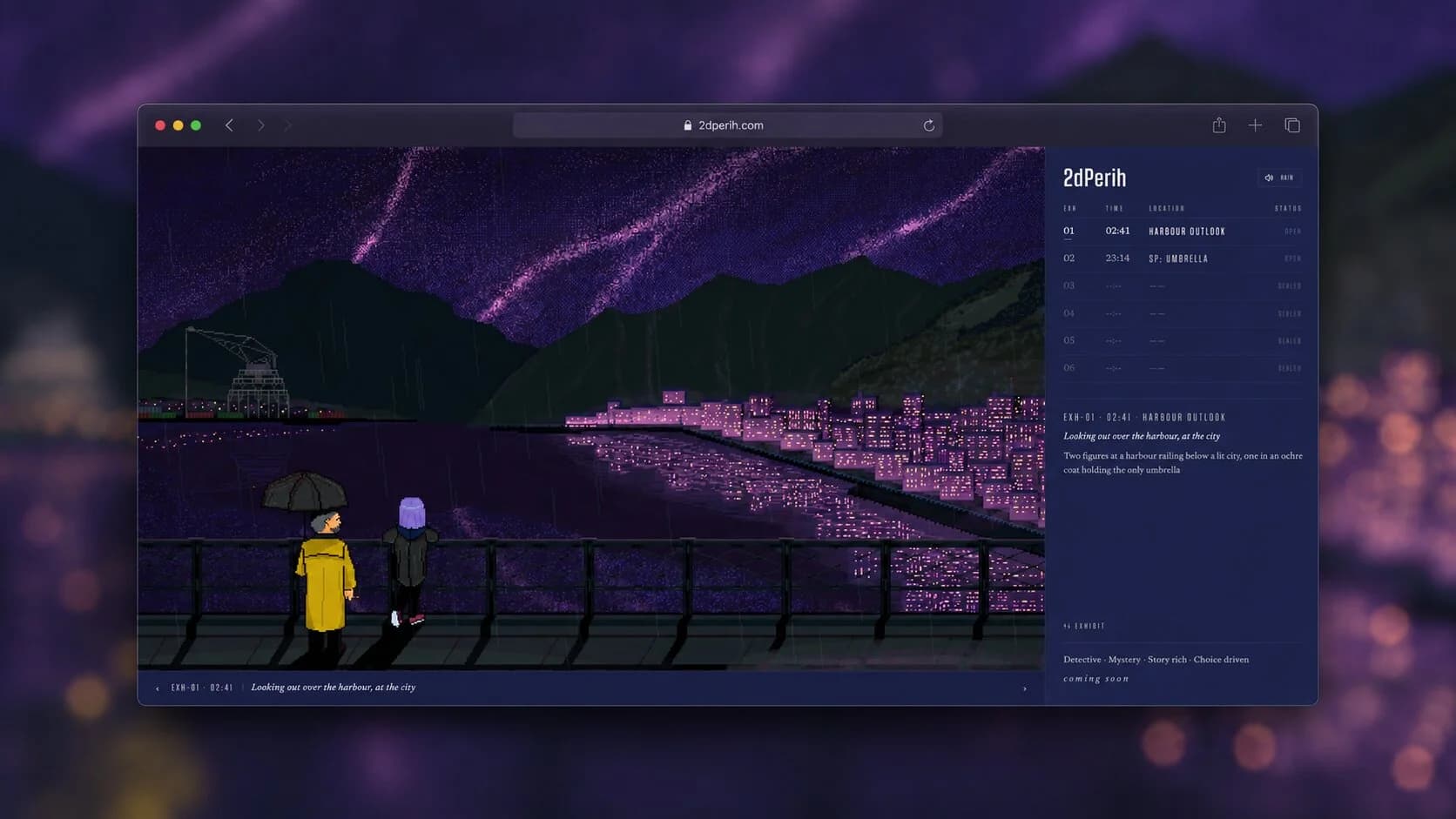
An Edmonton studio working in pixel art
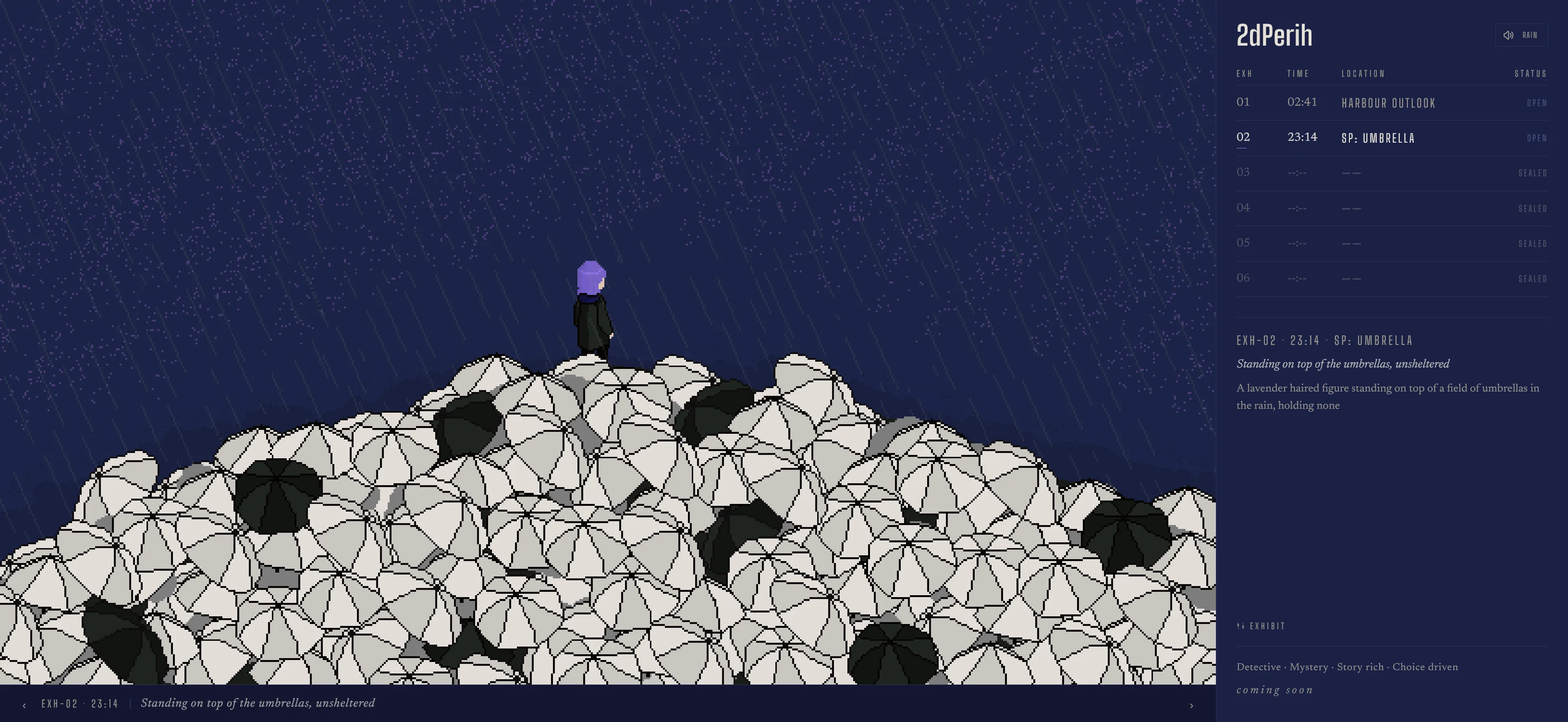
2dPerih is an Edmonton studio making a pixel-art detective mystery. Its finished marketing art was a set of animated stills: figures at a harbour railing under a lit city, and one standing on a field of umbrellas in the rain.
The studio owned the domain and wanted its upcoming work advertised there, with room for the art still to come.
The studio already had the art
A site has to look deliberate while admitting how much of it is still coming. The obvious version, the finished stills stacked over a mailing-list field, says the art exists and nothing else, and reads worse every month the next image doesn't arrive.
What the studio asked for
Simple, elegant, easy to manage. New art should go up without a developer, and the site had to read as intentional with only part of the art in hand.
HD Web proposed treating the marketing material as evidence and the site as the archive a detective signs into. The studio agreed.
The entrance, then the record
A visitor meets the site in this order: an archive login that runs while the art downloads, then the record.
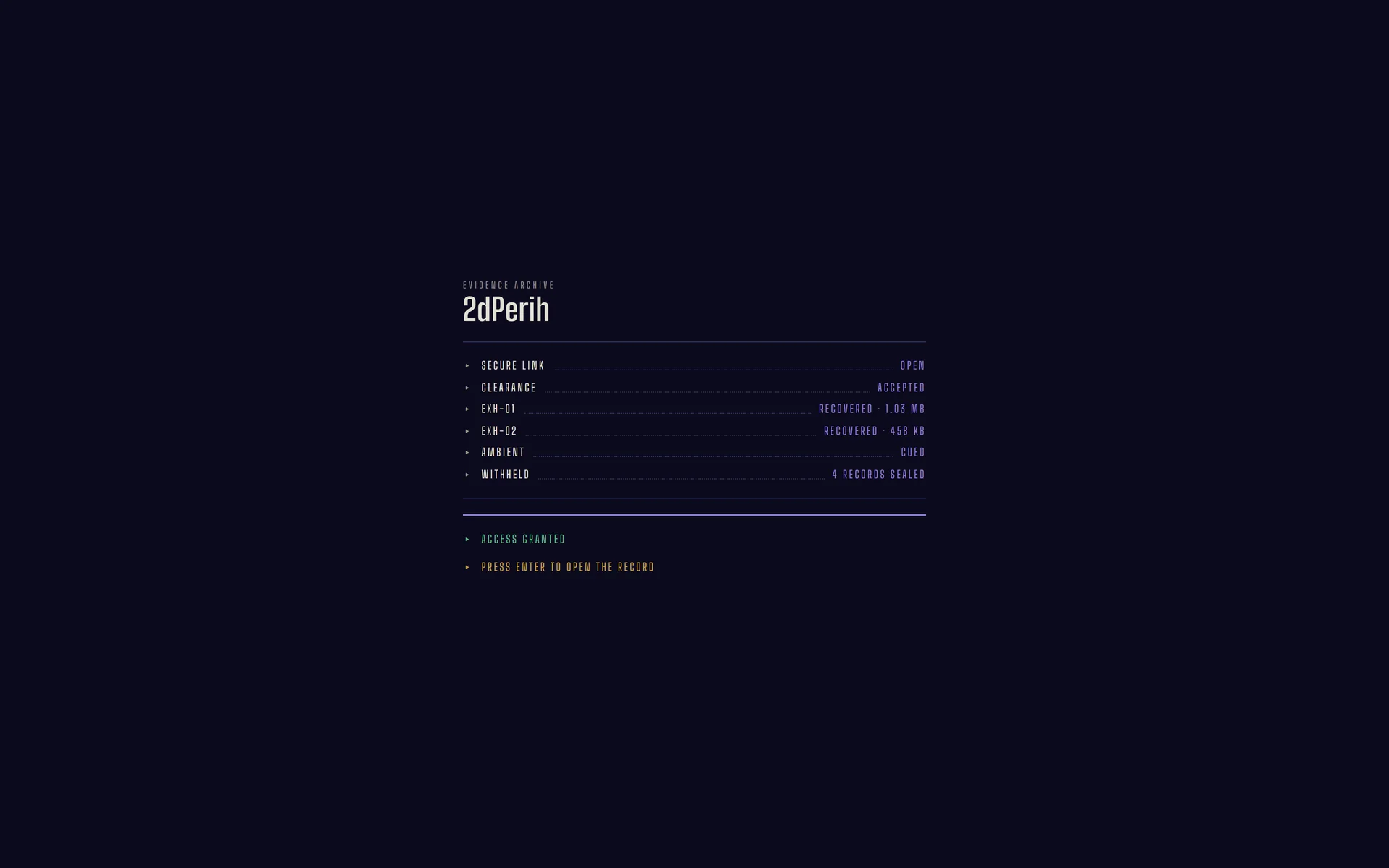
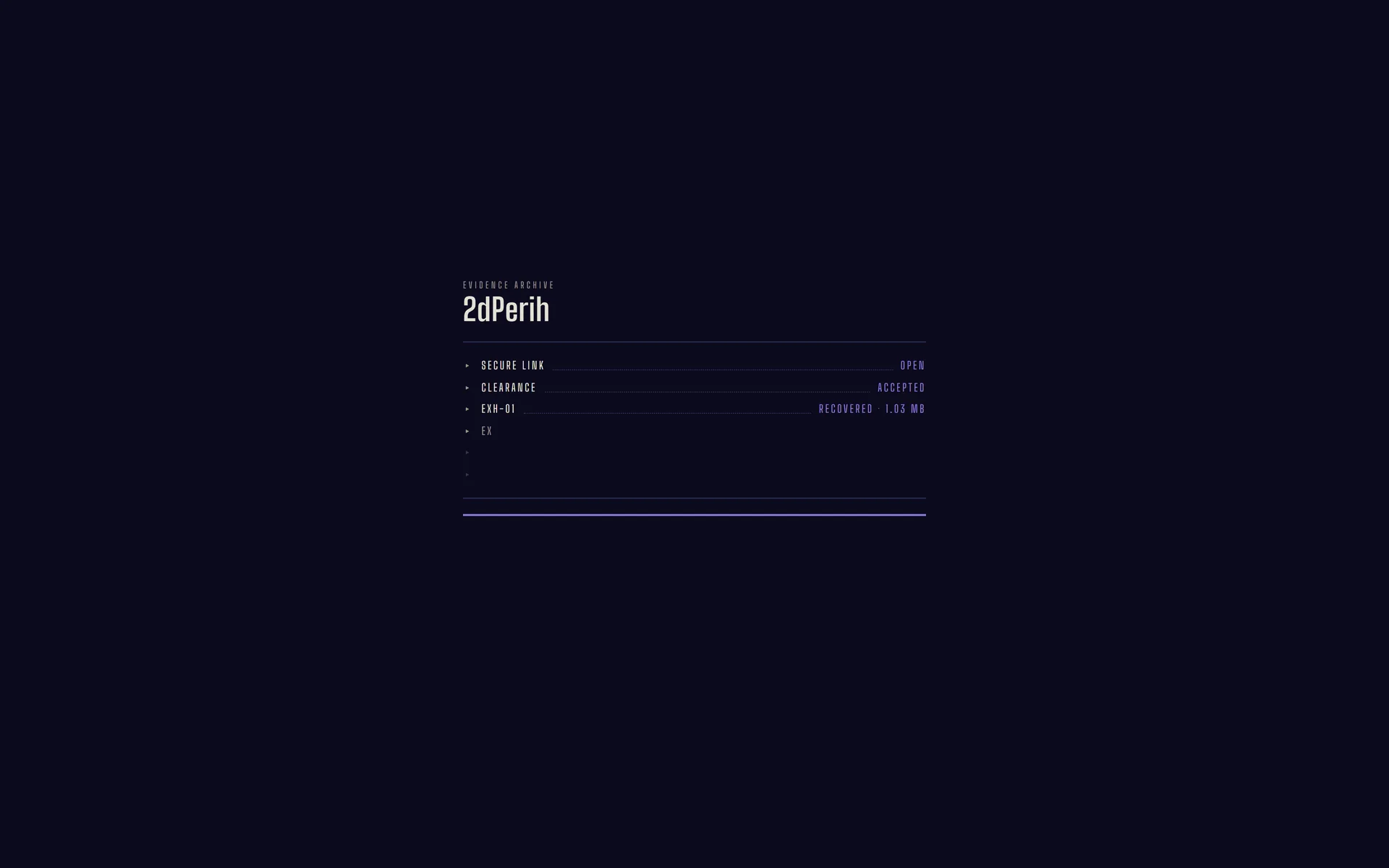
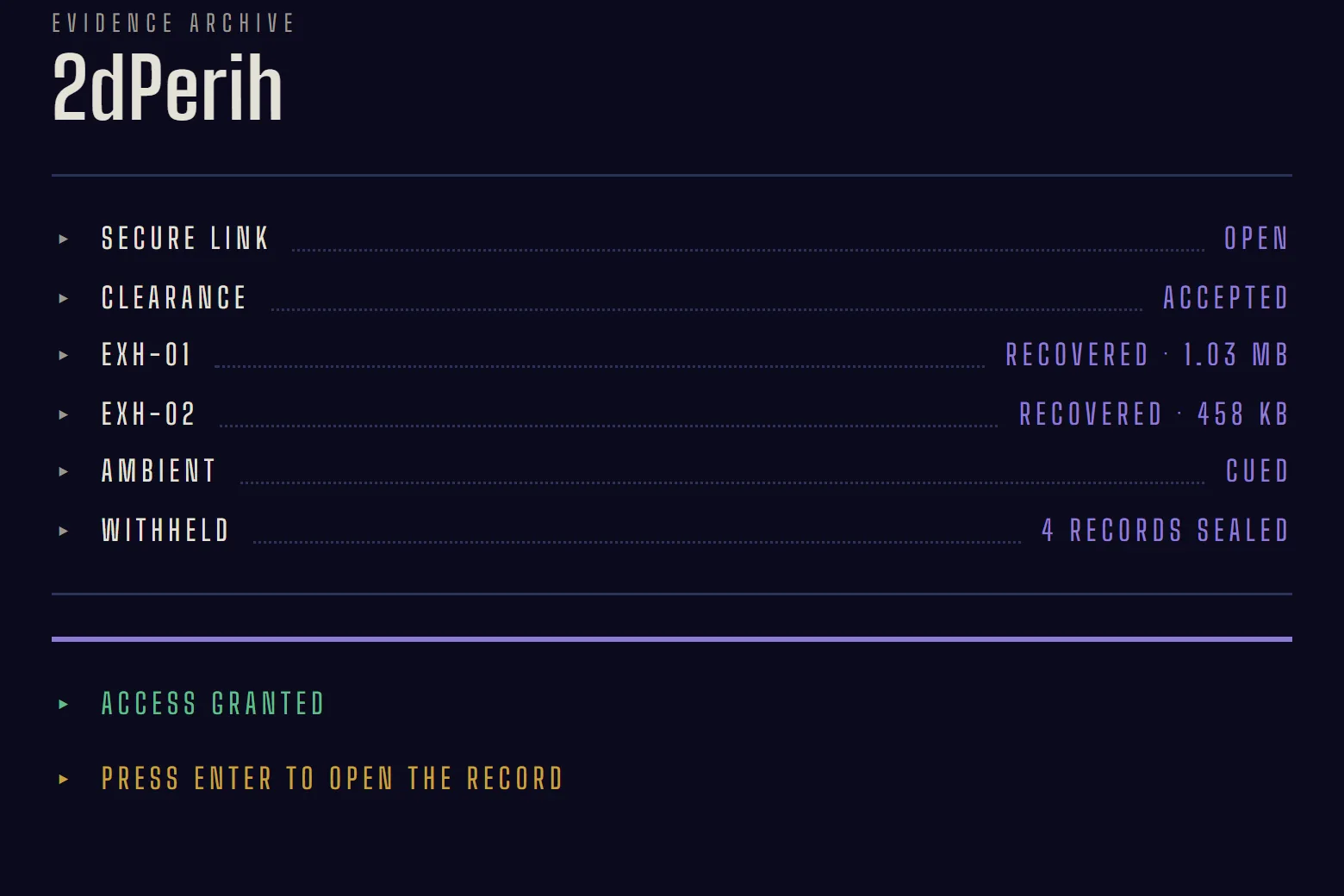
An access log that runs the entrance. Half its steps wait on real files, and the last line states how much of the archive is still sealed.
The entrance, captured at 1440 by 900 on September 19, 2026.
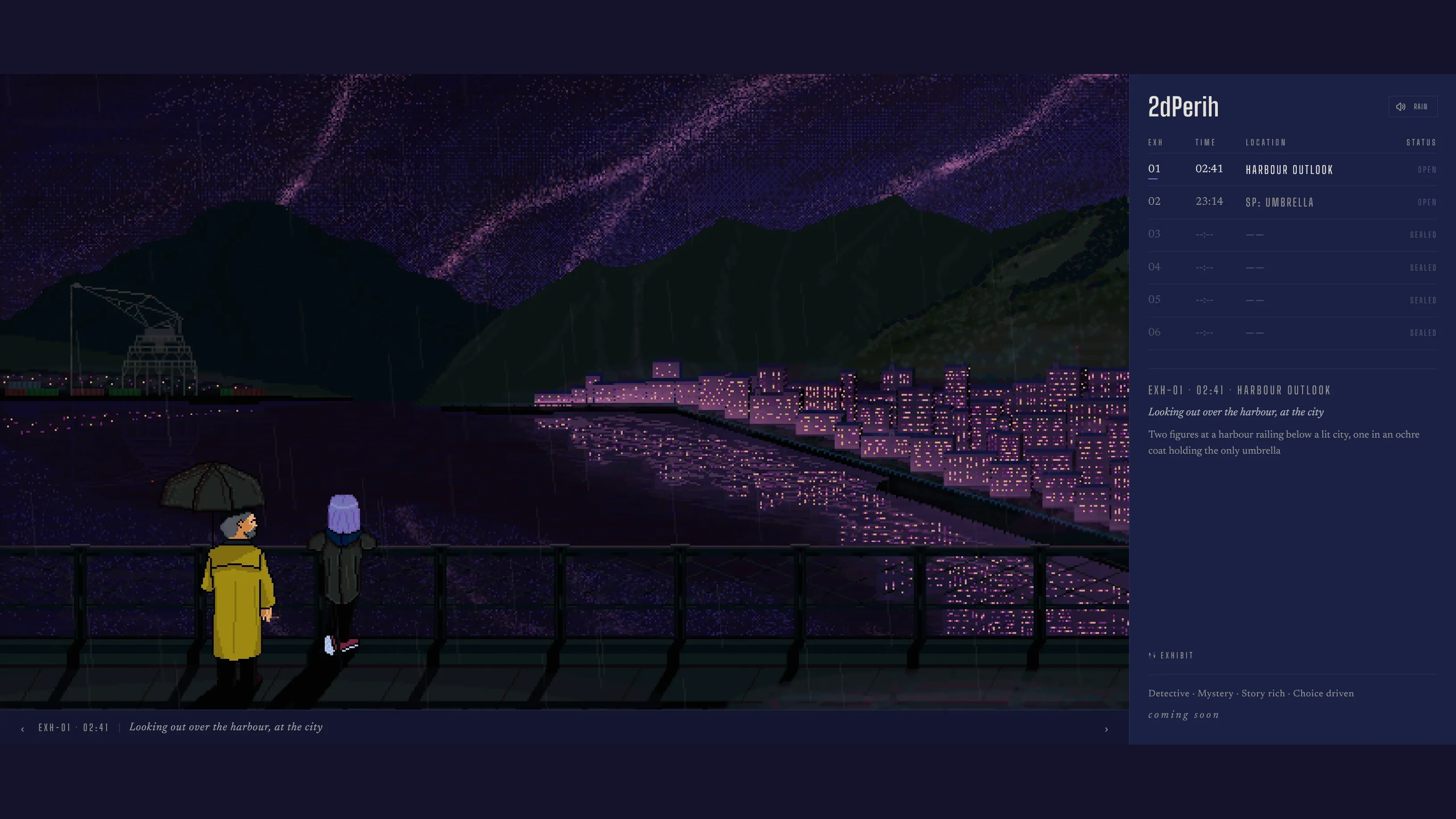
The archive itself: the still on the left, the exhibit table and its open record on the right, a caption bar underneath.
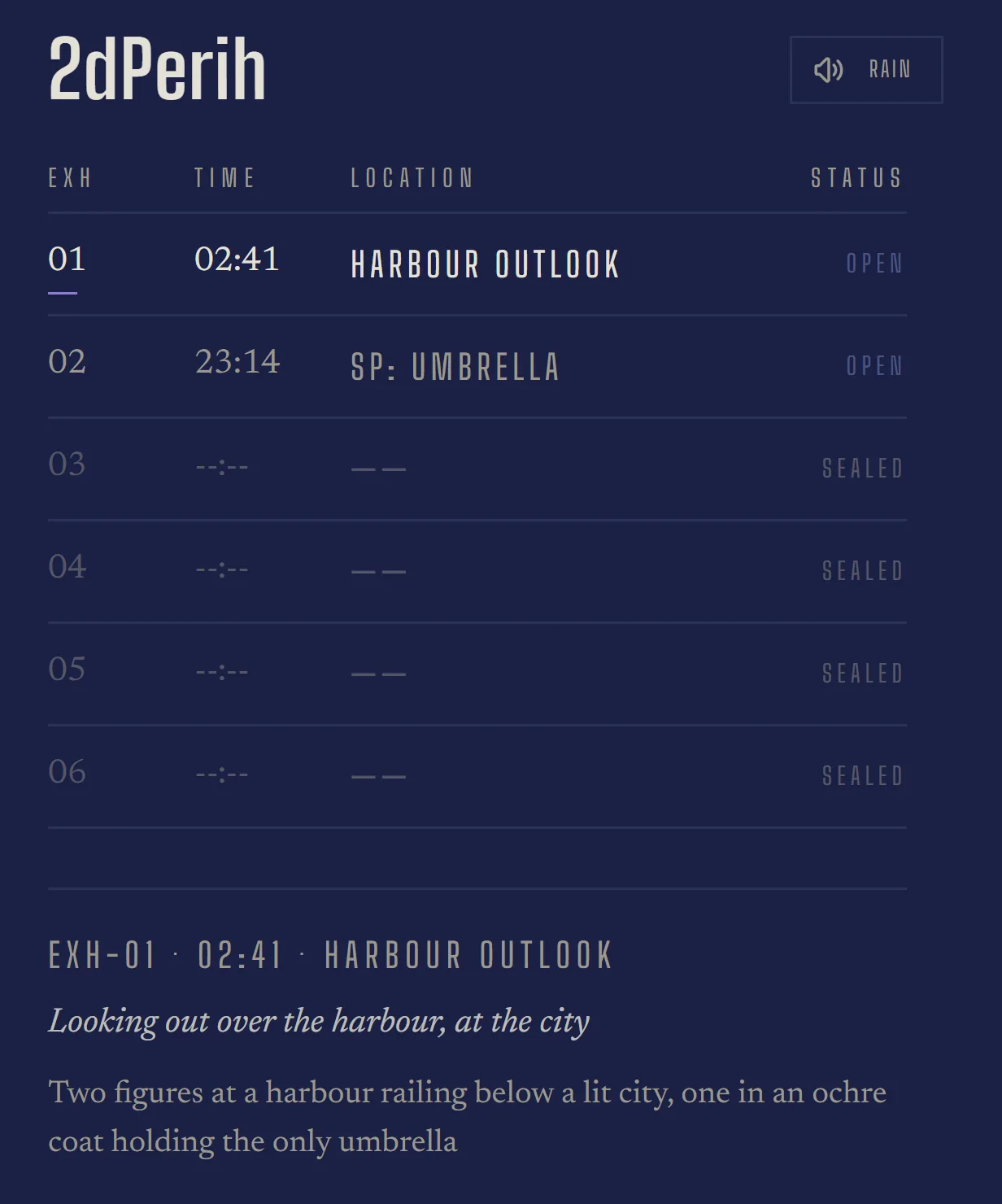
The record view, with EXH-01 open, in a single frame.
What the site had to get right
- 01
Treat the marketing as evidence
The art is the case, so it gets exhibit numbers, timestamps, and a location.
- 02
Arrive composed
Hold a visitor at the door until the art has decoded. Nobody meets a half-drawn frame.
- 03
Nothing moves
Lay every surface out at its final size, so a font swap can't shift the frame.
- 04
Be honest about how much exists
Label the empty slots instead of padding the table with repeats.
The decisions that carry the site
Each one comes out of having a little finished art instead of a lot.
The loading screen is a real readout
Half the steps wait on real files: the stills must decode and the ambient track must buffer before their lines resolve. A missing file prints UNAVAILABLE, a stall prints TIMED OUT, and neither guesses at a reason. A 3.5-second floor protects the choreography; a 15-second ceiling means nothing holds a visitor at the door. The rain starts on the entering gesture, never before.
The empty slots stay labelled
Repeating the finished stills under fresh numbers would have read as a bug, so the remaining rows sit marked SEALED, with no time and no location. It reads as an archive without overstating how much art exists, and the sealed rows are a promise the studio can keep one file at a time.
The frame never shifts
The site never scrolls. The still holds a fixed stage, a constant-width rail sits beside it, and the record slides across instead of growing, so the art never moves a pixel. Below 1280 pixels the rail collapses to a strip of exhibit chips; above it the record stays open. Reduced motion keeps the entering gesture and drops the animation.
New art is one entry in a data file
The table, the chips, the keyboard cycling, the record detail, and the sealed count in the access log all read from that one entry, so nothing else is touched. Versioned image filenames let the files cache for a year: new art gets a new number instead of overwriting bytes browsers already hold.
How the work was shaped
Details that keep the frame still
The stills are pixel art, so above 768 pixels they render with nearest-neighbour sampling, where hard edges are the point. Smaller than that it shimmers, so smooth filtering is the honest reproduction. The display typeface ships with a hand-written metric-matched fallback, and the caption bar and log rows declare their own heights, so a font swap moves nothing.
Who brought what
2dPerih supplied the art, the domain, and the genre line it publishes with them: detective, mystery, story rich, choice driven. HD Web proposed the evidence framing and built it. The heading, like the exhibits, reads from data the studio controls.
What is now in place
The site went live on September 19, 2026. These are delivered capabilities, verified on the live site. No business outcomes have been measured.
- 01A single-viewport marketing site live at 2dperih.com
- 02An entrance sequence wired to real image decode and audio buffering, with per-file timeouts and a hard ceiling
- 03Exhibits with in-world metadata, alongside openly sealed slots for art still to come
- 04Keyboard navigation to cycle, open, and close exhibits, and a focus-managed entrance
- 05A reduced-motion path that keeps the entering gesture and drops the animation
- 06Opt-in ambient audio with a mute control
- 07A data file the studio extends with one entry per new exhibit
- 08Long-lived image caching keyed to versioned filenames
Client perspective
“We love the cinematic feel and vibe of the site, it fits in well with our existing marketing materials.”
What HD Web handles from here
New art arrives as one entry in the data file. HD Web adds it, re-cuts the captures, and checks that the frame still holds at every width, so the studio never has to schedule a release around a website. When the site needs to be more than one page, the same archive pattern extends without a rebuild.
Start a conversation
If you have something worth showing and not much of it yet, we can talk about how to present it honestly.